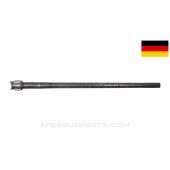
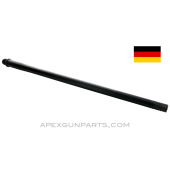
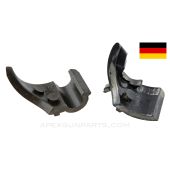
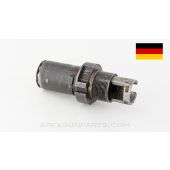
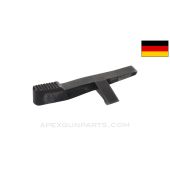
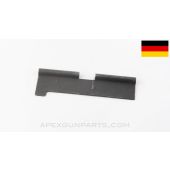
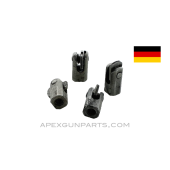
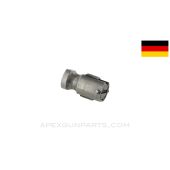
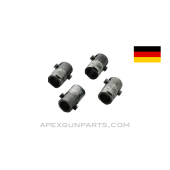
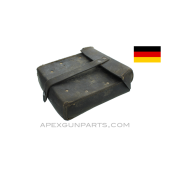
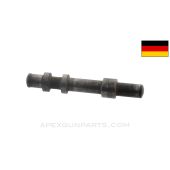
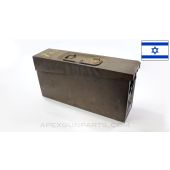
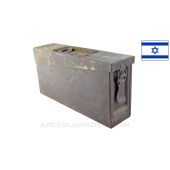
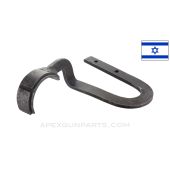
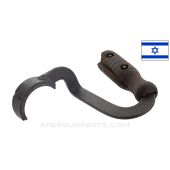
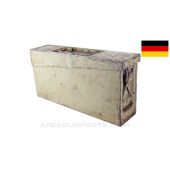
MG34

Steel and Speed: The Story of Germany’s First Universal Machine Gun |
|
The Birth and Innovation of the MG34 The MG34 (Maschinengewehr 34) represents a monumental milestone in military engineering, conceived to bypass the strict weapon restrictions imposed on Germany by the 1919 Treaty of Versailles. Chief designer Heinrich Vollmer spearheaded its development at the famous Mauser company, drawing on earlier clandestine designs from Rheinmetall. When it was officially introduced in 1934 and mass-produced starting in 1936, it shattered traditional military doctrine by becoming the world’s very first General-Purpose Machine Gun (GPMG). Before the MG34, armies had to clog their supply chains with two entirely different types of weapons: light, mobile machine guns for advancing infantry, and heavy, water-cooled machine guns for static defense. The MG34 solved both problems with a single, highly adaptable weapon. Manufactured across a network of German factories including Gustloff-Werke in Suhl and Waffenfabrik Brünn in occupied Czechoslovakia, it featured a revolutionary quick-change barrel system to prevent overheating. It could be deployed on a lightweight bipod for rapid squad movement, mounted on a complex Lafette 34 tripod with an optical sight for long-range sniper-like precision, or integrated directly into the ball mounts of Panzer tanks and the hulls of German aircraft. Firing standard 7.92mm Mauser ammunition, its recoil-operated system achieved a staggering rate of fire of up to 900 rounds per minute. It even featured a unique dual-stage trigger: a pull on the top half fired single shots, while a pull on the bottom half unleashed full automatic fire. Global Conflict, Flaws, and Legacy When World War II erupted, the MG34 became the iron backbone of the German Wehrmacht's devastating Blitzkrieg (lightning war) tactics. The weapon saw its first major combat deployments during the Invasion of Poland in 1939 and the swift conquest of France in 1940. Because German infantry tactics revolved entirely around protecting and feeding the squad machine gun, the MG34 was heavily relied upon during the massive invasion of the Soviet Union (Operation Barbarossa) in 1941 and the fierce urban combat at the Battle of Stalingrad. It also dominated the desert sands of North Africa with Erwin Rommel’s Afrika Korps. However, the very thing that made the MG34 an engineering masterpiece also proved to be its Achilles' heel on the battlefield. It was a victim of Swiss-watch precision. The weapon required incredibly tight mechanical tolerances, making it highly expensive, time-consuming to build, and wasteful of raw materials at a time when Germany desperately needed to scale up production. Furthermore, when introduced to the freezing, muddy expanses of the Eastern Front or the gritty sands of Egypt, the delicate internal mechanisms easily jammed. This forced German engineers to create a successor, the stamped-steel MG42, which was much cheaper and faster to make. Yet, because the MG42's square barrel shroud could not fit into the narrow armor slots of Germany's tanks, the precision-machined MG34 remained irreplaceable. It stayed in constant production and fought on the front lines until the final, desperate Battle of Berlin in 1945. |